Bumblefoot
As our lives becomes more sedentary and high calorie food is so
available, both humans and our avian companions birds are often
obese and less active. These are two major contributory causes
to bumblefoot in birds. This syndrome is also called
Pododermatits or Planter Pododermatits. It is essentially a foot
disease of birds in captivity.
Bumblefoot is a chronic disease of long duration, usually taking
months or even years before the clinical signs of disease are
noticeable. The disease gets progressively worse with time, and
invades the deeper foot tissue, and eventually causes lameness,
disability and even sepsis
.
How does the bacterial infection of the feet start? (See picture
1)
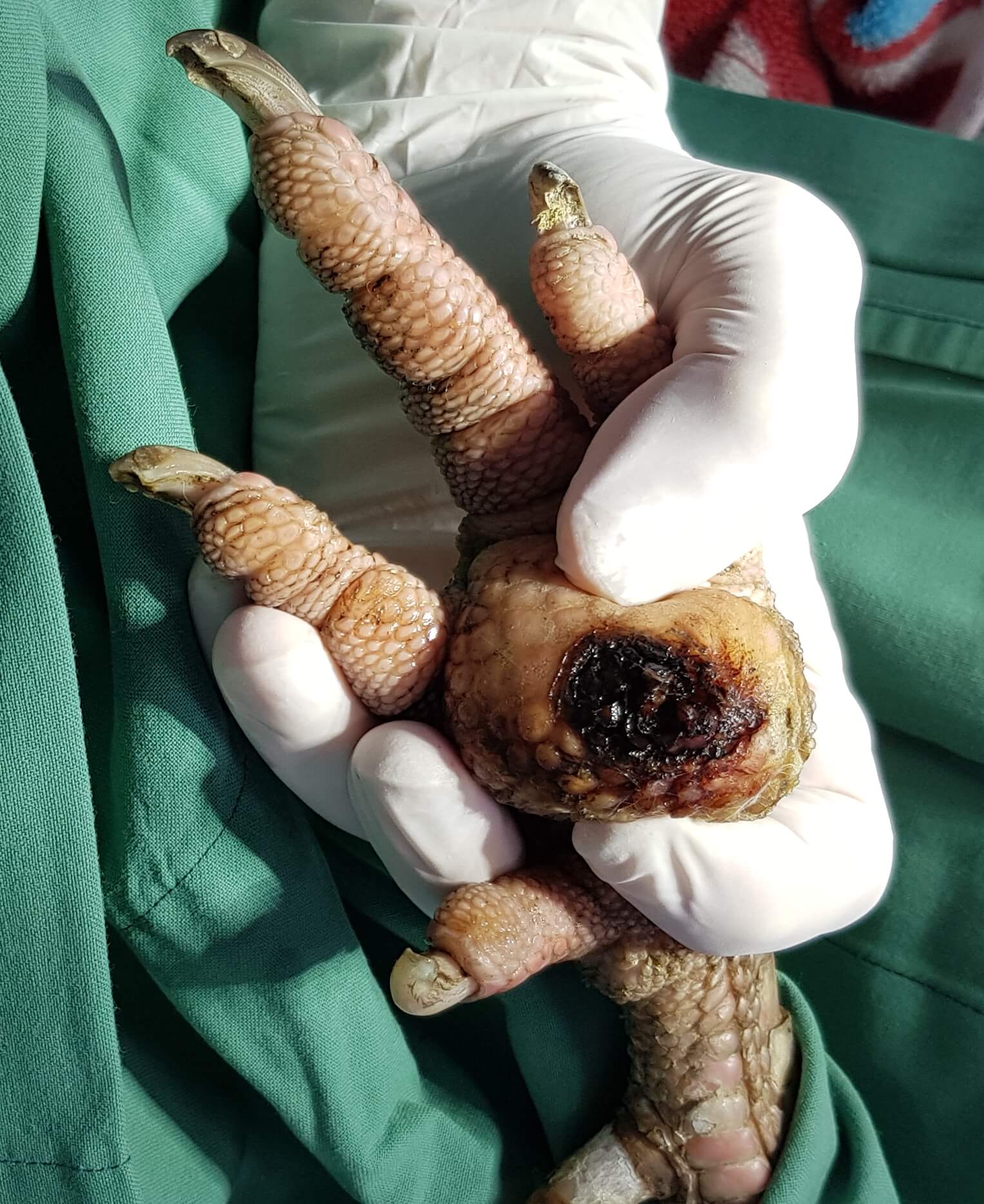
Picture 1 : Typical advanced round black, bumblefoot lesion,
seen at Bird Vet Melbourne
Infection of the birds feet starts in two ways:
Firstly from trauma Eg: a cut, abrasion or
ulceration of the surface of the foot, or a deep wound to the
foot from a sharp object.
Secondly through longstanding abnormal pressures on the
foot resulting in decreasing blood flow to the foot , and a
thickened abnormal foot. This ongoing unrelenting pressure on
the foot pad damages the normal ability of the foot immune
system to keep bacteria and infection out.
This allows bacteria to enter into underlying foot pad tissues
and results in a bacterial infection. Because of abnormal
pressure and poor blood supply, there is reduce immune function
and long standing infection starts and continues to progress.
The foot becomes thickened and filled with abnormal solid tissue
and pus. Bird pus is thicker and more solid than mammalian pus.
At Chicken Vet Melbourne, Bumblefoot is a common problem. We see it
often in Chickens, Ducks and Turkeys. It is becoming more common
in parrots and other species and is most common in older
Budgerigars and obese cockatoos that are on smooth Dowel
perches. This is especially so when the highest perch is round,
smooth and narrow, and the Bird sleeps on it.
Bumblefoot eventually leads to inflammation and abscessation in
the deeper layers of the foot and causes a lot of PAIN. Left
untreated, it may progress to a build up of dead tissue in the
foot, and septic arthritis in the foot and ankle bones and bone
infection. Eventually death may occur. The bacteria named
Staphylococcus Aureus is the most common bacteria found in these
lesions.
Predisposing causes to the condition, at Melbourne Bird Vet.
-
Poor perches – round smooth narrow perches contribute to abnormal pressures on the foot and eventual damage.
-
Trauma – from splinters, wires, concrete, thorns or glass.
-
Nutritional deficiency – especially Vitamin A deficiency in parrots and Biotin deficiency in chickens.
-
Obesity – being overweight puts abnormal pressure on the feet.
-
Cage Flooring design – a soft clean dry floor is ideal. In muddy wet conditions the skin on the bottom of the foot is softened and easily infected.
-
Excessive weight on one foot due to lameness of the other, or loss of the other leg, resulting in unnatural excessive forces on the little foot pad.
-
Lack of activity – standing on a perch in the same spot for prolonged periods is an important contributing part of the Pododermatits syndrome.
-
Lack of exercise.
-
Rough, abrasive or sharp surfaces.
-
Decreased blood supply to the foot, for example with fungal toxins, frost bite, trauma or tight leg rings. .
Surgically we remove dead or necrotic tissue. (See Picture 2, At Poultry Vet Melbourne)
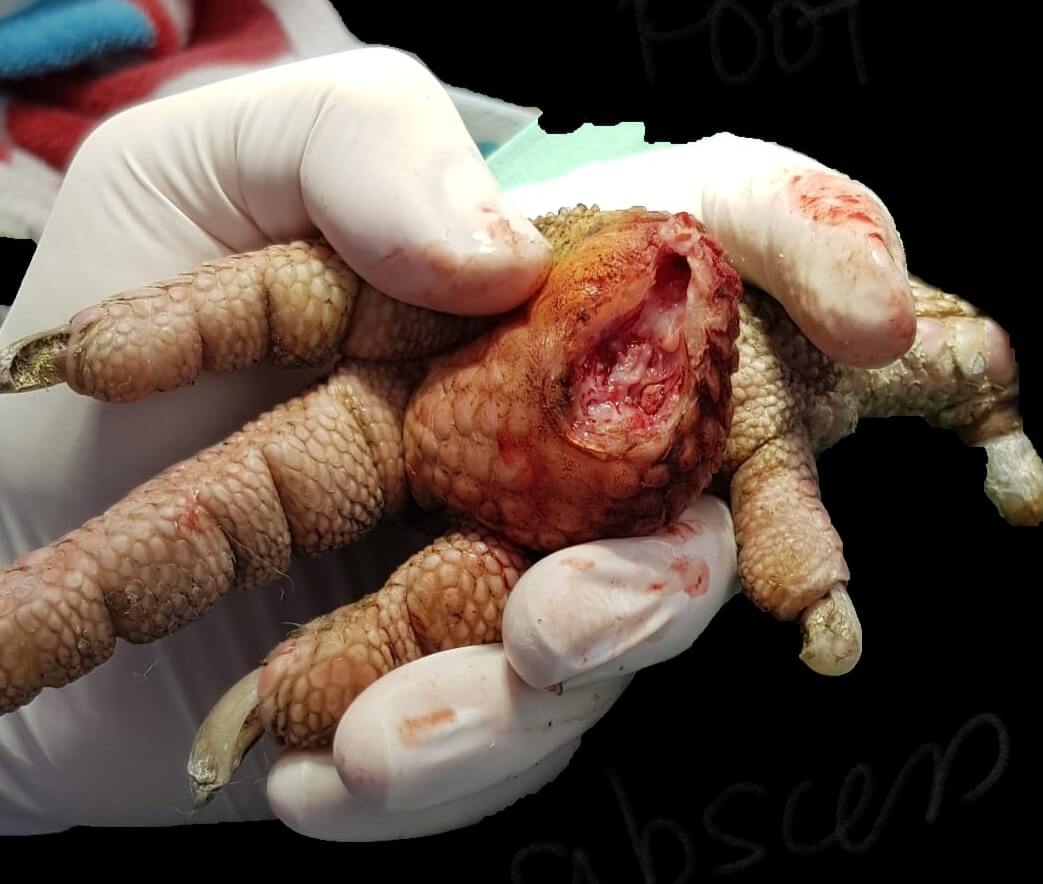
Picture 2 : In Surgery , after the dead tissue has been removed
from the foot.
Treatments of (advanced) the Bumblefoot Syndrome, at Bird Vet Melbourne
-
Antibiotics, placed into the core of the avian abscess of the infected foot. Bird specific Antibiotic impregnated beads are often used for this purpose.
-
Foot bandaging and replacing the bandage every 5 days for about 3 - 6 weeks after surgery is not uncommon.
-
Broad spectrum antibiotics for about two weeks.
-
Correcting dietary deficiencies. ( esp in smaller Parrots- as noted at Budgie vet visits)
-
Correcting weight in obese birds. This is often difficult in large Turkeys or Broilers (Meat producing Chickens that are bred to be massive.)
-
Perches – softer perches and softer surfaces to enable the weight to spread over a larger surface area of the foot
-
Use of a surgical intravenous “Vascular Access Port” for easy daily intravenous antibiotic administration in the treatment of Pododermatitis in a Chicken has been used successfully.( by Bird Specialist Dr Bob)
Pododermatits in an turkey.
On Tues the 20 of November 2018 Dougie a 2 year old Turkey was
presented to Avian Vets in Melbourne, the local Turkey
Veterinarian with a sore foot. Dougie is a
well loved family pet. The family kids adore him and play with
him. Just like other pets the Turkey enjoys playing and
companionship. Dougie’s astute owners noticed the lameness and
examined the sore foot. They found a large black sore. See
Picture 1
Dr Phil, an experienced Avian vet, examined the 13.5 kg bird. Advanced Bumblefoot was
diagnosed. The only option in Dougie’s case was surgery, as the
foot pad lesion was advanced and extensive. The family consented
to surgery and a day to recuperate in the Melbourne Bird Vet
Hospital. During surgery, under general anaesthesia the infected
tissue was removed. See Picture 2
Picture 2 -The foot pad after removal of the infected tissue by
the "Turkey Vet".
The open wound was filled with antibiotic and surgically closed.
The foot was then bandaged and wrapped in a thick plastic boot
to keep it dry.
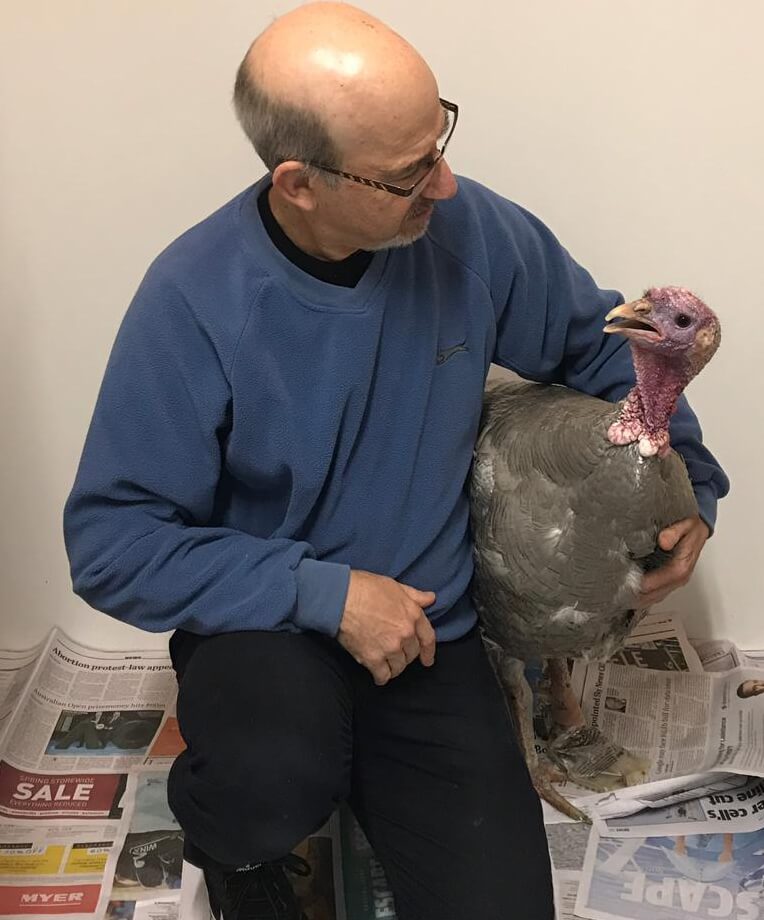
The next day Dougie appeared to be walking better and was
discharged – Picture 3.
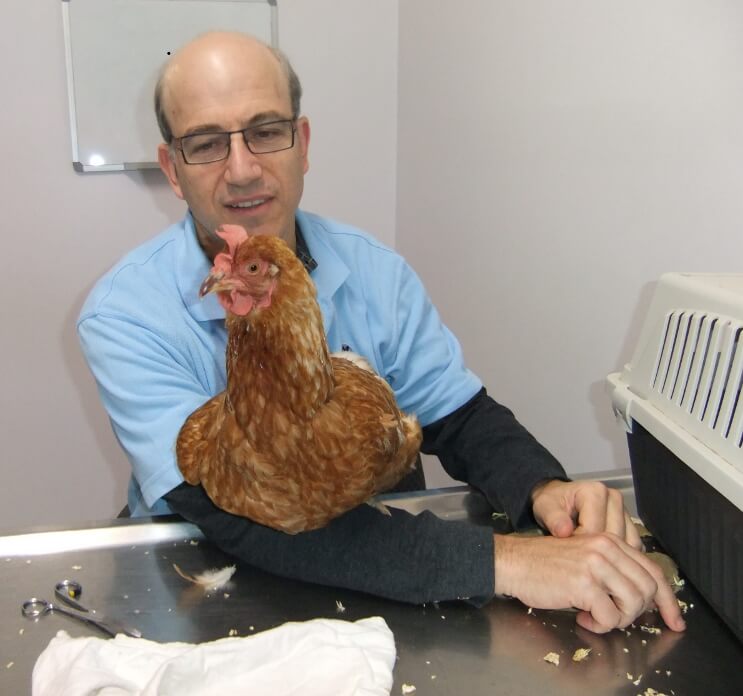
Picture 3- Dougie with Dr Phil.
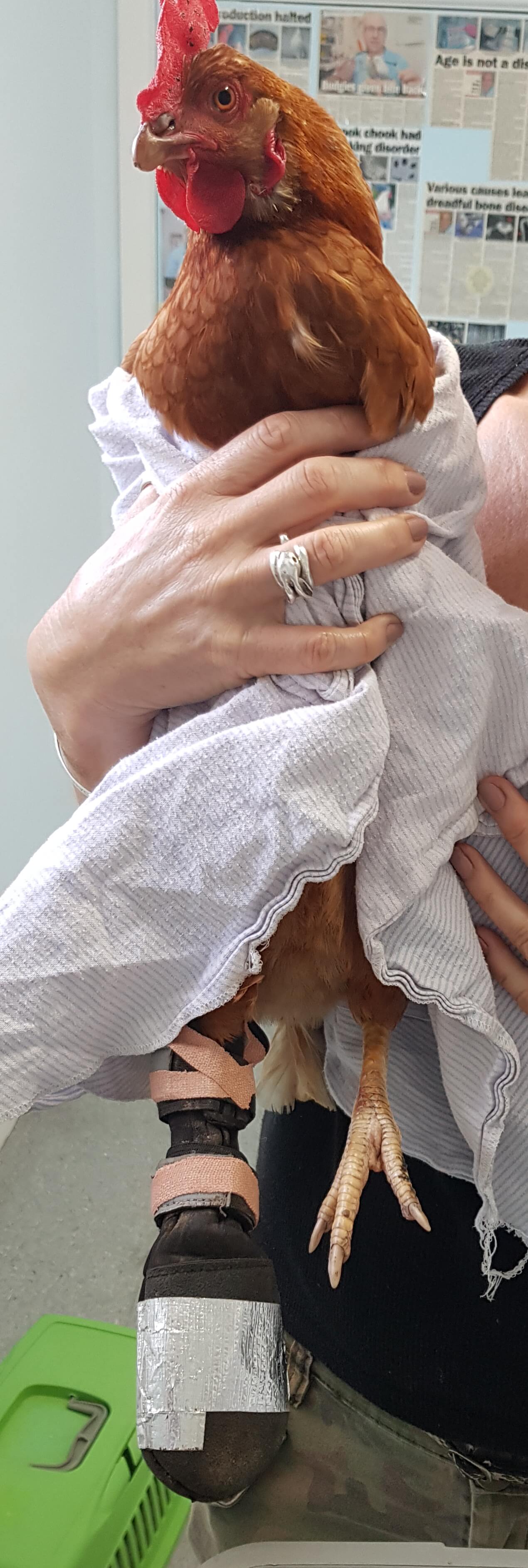
Picture 4- A chicken with a “Bumblefoot” chicken shoe that has
been worn for 3 weeks. The bumblefoot has almost healed in this
bird now 13 days after surgery, and we expect good recovery.
(chicken veterinarain)