

Caring for your Pet Lovebird - Bird Vet Melbourne Dr Phil
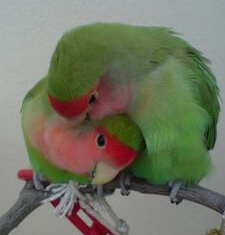
In the wild they are typically seen sitting in pairs snuggling together looking really cute! Hence their scientific name is Agapornis - Agape = love; and ornis = birds. Love birds are African Parrots.
Lovebirds are a diverse group of small, about 45 grams body weight, colourful African parrots. Love birds are playful and inquisitive. Commonly kept species include Peach-faced Lovebirds, Masked Lovebirds and Fischer's Lovebirds. Lovebirds live to their mid-teens. Dr Phil's oldest love bird patient at Bird vet Melbourne lived until 22. They are bundles of energy that need a interaction and stimulation to keep their active minds from getting bored. The toys and set up of the cage "furniture" is very important. Two love birds can drive each other crazy if their cage is too small- with the result being that one of the birds starts biting at its own skin and feathers. If kept alone as an only pet bird they need lots of companionship as they are different to people - they usually "partner for life" and are very loyal. "Hand raised" birds are tame and sweet and make excellent every cuddly pets.
Housing and husbandry
Lovebirds can be kept in a large cage or aviary
- Perches should be natural wood of varied diameters starting at 1.5 cm .. Place at opposite ends of the cage to encourage flight. No sandpaper on perches.
- Place multiple feed dishes at te bottom of the cage to encourage "exploring" .
- Interactive toys - (see our great selection and most are less than $10) and Native Australian tree branches, gum nuts, grasses & greenery should be put into the cage for behavioural enrichment & beak care.
- Remember that birds fly horizontally like airplanes rather than vertically like helicopters. It is more important for their cages to be long and wide rather than tall. Place toys on the sides of the cage and do not clutter their flying area.
- Rectangular cages are preferred.
- Cover the birds at night and have a safe covered corner for the love birds to relax in the day. See our fantastic granny sewed "day corner cage buddies".
Diet - Dr Phil recommendds to feed each of the four food groups every SINGLE day.
In general healthy human food is healthy for birdslacking nutrients or high in salt or fats are not good. Feed a combination of formulated small parrot or crumble , In general healthy human food if healthy for birds. Food some seeds and dark green vegetables every day.
- Dark green vegetables - which ever your love bird prefers EG: spinach, silver beet, grated carrots, beans, peas, broccoli
- Limted seed eg 2 teaspoon/day of small seeds.
- Low fat low sugar human foods like oats, multi-grain bread, pasta, wheat-bix etc is also good - Is is so bonding to share a meal together especially for the single pet bird.
- Remember that birds fly horizontally like airplanes rather than vertically like helicopters. It is more important for their cages to be long and wide rather than tall. Place toys on the sides of the cage and do not clutter their flying area.Pellets like harrisons , Pretty bird or Vetafram - offered mixed with the seed in all three food containers
Fruit especially apples also pasta, -rice, chicken bones or other meat or chopped hard-boiled egg Sprouted seed is excellent nutrition. If your bird eats the four food groups every day supplements are usually not necessary.
* Avoid chocolate, caffeine, alcohol or avocado as these may be toxic.
Common illnesses (see separate articles)
- Feather picking and feather mutilation especially over the shoulders - Can be associated with two incompatible birds or very little mental stimulation.
- Megabacteria a fungal intestinal infection.
- Along with the vegetables, feed a combination of formulated canary crumble and mixed seeds.Beak and Feather Disease - a viral disease -usually self limiting.
- Bacterial infections.
- Injuries from domestic violence.
Dr Phil liked the following book: Lovebirds: Everything About Purchase, Care, Feeding, and Health By Mary Gorman - Available for < $10 with postage online.
Health Care
* We recommend a health check as with dogs and cats, (with testing as appropriate), when you acquire your new lovebird and each year thereafter, to ensure health and prevent common illnesses.
Birds often hide signs of illness and may only appear unwell when they are very sick. It is important to seek advice early if your bird looks unwell.