


Bird Vet / Avian Vet Melbourne By Dr Phil
The lorikeets are acrobatic, playful and energetic birds and in their natural environment "dive Bombers of the sky", They eats nectar and fruits rather than seeds. They need a specialized diet of a nectar mix, fruit and vegetables. Lorikeets are quite messy with their wet droppings. They require a diligent owner who is willing to clean the cage every day to prevent bacterial and yeast (thrush) infections. Lorikeets are extremely playful and love to listen to music and dance. They form strong bonds with their owner and make excellent pets for those willing to provide the specialized care required by the lorikeet. This includes providing wet mix or nectar as a food source and ensuring the cage is kept clean despite a very messy bird. As with any parrot species, it is best to obtain a hand reared bird from aviary bred parents. They particularly enjoy being placed on their backs. But.. baby Lorikeets are different in nature and often are found as babies completely trusting and gentle and endearing.. No wonder there are so many Lirokeets kept as pets.!
Housing and husbandry
Lorikeets can be kept in a large rectangular cage or aviary
- Careful of "happy huts" - we have seen many birds die from ingestion of fibers from happy huts !! we sell a much safer version at the Bird vet Melbourne
- Perches should be natural wood, of varied diameters and regularly replaced. Place at opposite ends of the aviary to encourage flight. Avoid sandpaper on perches.
- Let your pet Lorikeet have access to a bird Bath - they love it!
- All Lorries enjoy having a swing and "ring" type toys to do "tricks" with.
- Leafy native Australian tree branches, grasses & greenery should be put into the cage for behavioral enrichment.
- Lorries tend to play with toys See our range of Bird toys. Change toys regularly.
- Do not use frayed rope or fine fibres or in the cage as Lorrys have a papilla on their tongue that a are prone to getting caught in the fibres.
- A reasonably sized rectangular cage is suitable for a pet bird . Narrow round cages are NOT recommended.
- The cage should be away from draughts and direct sunlight.
- Many Lorries make wonderful single bird pets provided they are taken out daily and are boded to the family.
- have your bird out of the cage into your home - once or twice daily for at least an hour.
- A very light wing trim to slow them down is usually great.
Feeding a Lorikeet / Lorry Diet
- Commercial Lorikeet wet and/or dry mix should be made up fresh once or twice daily (This is equivalent to their natural diet of nectar and pollens from flowering native trees.) THEY ARE NOT SEED EATERS!
- Ideally, each day your bird should be supplied a balanced selection of fresh Fruit daily - see what your Pet prefers and daily vegetables such as spinach, beans, parsley, broccoli, carrots, silver beet, etc.
- Other foods you can serve include pasta, rice, toast, eggs, mashed potato, chicken bones and other meats - share your meals with your Pet lorikeet.
- Australian flowers (Grevillia and bottlebrush etc.) may also be offered or other Australian Native plants.
- Avoid Alcohol chocolate, coffee or avocado - these may be toxic to birds.
Common disease seen at Lorikeet vet /Bird Vet
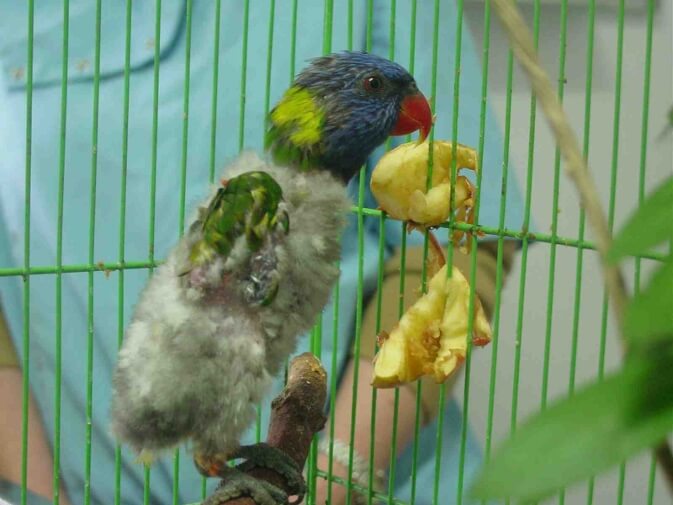
- Lorikeet paralysis - resulting in lameness and parlysis in their legs.
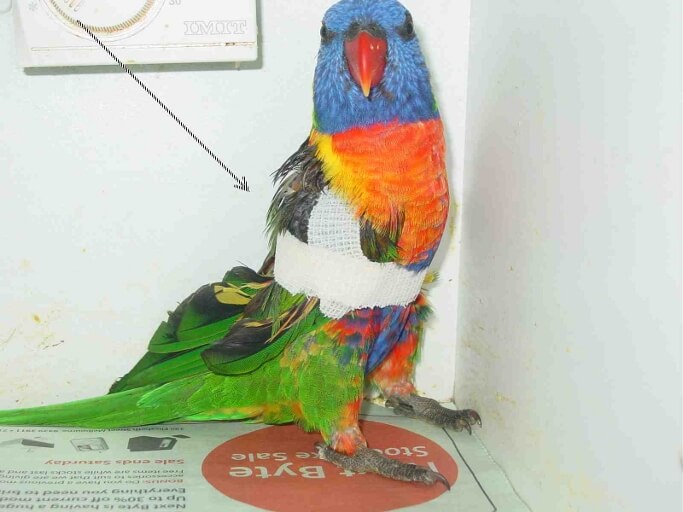
- Trauma - broken beaks, legs, wings.
- Obesity resulting in fatty livers and high cholesterol.
- Beak and Feather disease in Lorikkets.
- Yeast infections - Candidisis.
- Bacterial infections - esp sinusitis.
- Injuries in Lorries - especially of feet and tongue from rope toys, and obstructions from ingeting "happy huts".
- Fungal infection - Megabacteria.
- Fungal infection - Megabacteria.
Health Care for Pet Lorikeets
- We recommend a health check with us, At our Melbourne Bird Vet facility (with testing as appropriate), when you acquire your new Rainbow Lorikeet or other Lorry and each year thereafter, to ensure that basic care is not overlooked and and to check for and prevent common illnesses, help with wing trims, nail care and bird behaviour.
- A good book Dr Phil Recommends is: Birds for Dummies by Dr Brian Speer.
- For beginners Talking Birds Avian newspaper.
Birds often hide signs of illness and may only appear unwell when they are very sick. It is important to seek advice early if your bird looks unwell.