

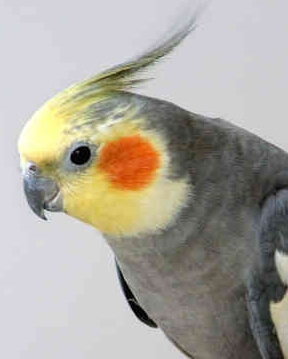
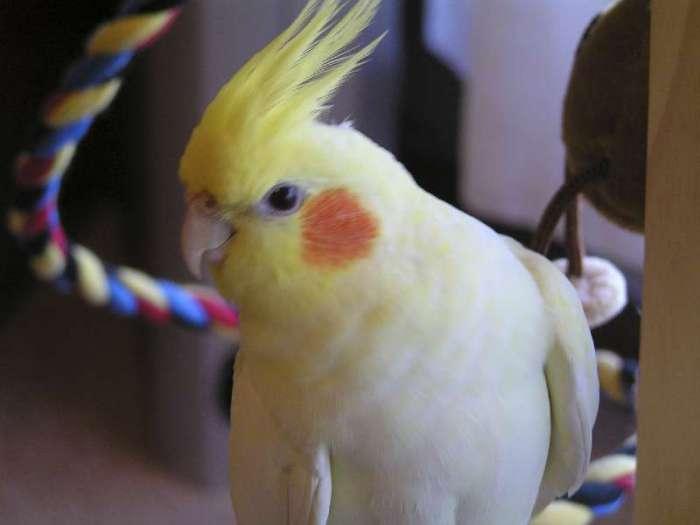
Cockatiels are the smallest member of the cockatoo family, they are easily tamed and make wonderful pets. Normal male cockatiels have bright orange cheek patches and a yellow face, females have a grey face with dull orange cheeks. Many colour mutations are available, some of these can be difficult to sex visually. Cockatiels can live over 20 years with an average life expectancy of about 16 years.
Housing and husbandry
Cockatiels can be kept in a large cage if alone and indoors in contact with people daily or with other suitable birds in an aviary.
- Perches should be made of natural wood of large diameters.
- 'Tiels are very clever and need lots of enrichment and stimulation - Individual pet need 2 -4 hours out of the cage daily!
- Dr Phil an avin vet thinls they are the best beginner "tame" pet bird.
- Avoid zinc or lead objects as they are shiny and toxic.
- Never use sandpaper on perches!
- Native Australian tree branches, gum nuts, grasses & greenery are excellent for behavioral enrichment & beak care. see our range of products available at the melbourne-bird-clinic on display..Some come from the parrot rescue centre so your purchase will also help abandoned parrots.
- Provide multiple toys: at least one cuddly, one to chew and destroy and then replace, one reflective, one to preen one mirror type, a bell .
- A single concrete perch helps wear the nails and beak.
- NOTE ! They sleep on the highest perch so make the highest perch broad and in the "safest' position.
Diet - Dr Phil recommends to feed each of the four food groups every SINGLE day.
In general healthy human food is healthy for birds. Food lacking nutrients or high in salt or fats are not good. Feed a combination of formulated small parrot pellets , some seeds and dark green vegetables every day.
- Dark green vegetables - which ever your love bird prefers EG: spinach, silver beet, grated carrots, beans, peas, broccoli.
- Limted seed eg 2 teaspoon/day/bird of small seeds. Bird ve says: NOTE limit the seed gradually over 6 -8 weeks.
- Low fat low sugar, low salt human foods like oats, multi-grain bread, pasta, wheat-bix etc is also good - Is is so bonding to share a meal together especially for the single pet bird.
- Pellets like Harrisons , Pretty bird or Vetafram - offered mixed with the seed in all three food containers
Fruit especially apples also pasta, rice, sprouted seed is excellent nutrition. If your bird eats the four food groups every day supplements are usually not necessary . Dr Phil's Tiel loved sharing healthy human foods with him like: Wheatbix, oats, toast, pasta, vegetables and almost all low fat low sugar foods.
* Avoid chocolate, caffeine, alcohol or avocado as these may be toxic.
Common illnesses seen at Melbourne Bird Vet.
- Chlamydiosis - Usually causes conjunctivitis and potentially transmissible to humans! and other birds.
- Malnutrition - usually due to too much fat in the diet or simply from an all seed diet - leading to fatty growths - usually on the wings and decreased vitality, immunity and longevity.
- Heavy metal toxicity from chewing lead or zinc containing objects - see bird articles for more information.
- Giardiasis, a protozoan parasite that causes itchiness and 'on off' loose droppings. Potentially Transmissible to humans.
- Egg binding, egg yolk related peritonitis
- Panic attacks in the cage- with damage to the flight feathers
- Heavy wing clipping - leading to psychological and physical injury (with each fall) - see the wing clipping page.
- Depression from not enough stimulation, companionship or interactive toys.'Tiels need branches to strip toys to play with and lots of owner interaction.
Health Care - Cockatiel- vet
- Chlamydiosis - Usually causes conjunctivitis and potentially transmissible to humans! and other birds.
Birds often hide signs of illness and may only appear unwell when they are very sick. It is important to get to an avian bird vet early if your bird looks unwell.
DO NOT downplay or deny the potential for serious illness as most medical problems are more easily and cheaply treated if addressed early. Don't let a friend, breeder, pet shop staff or anyone else talk you out of going to the Bird veterinary hospital if you are concerned.
- Pet Cockatiel Vet Question: My pet cockatiel sneezes more than my other birds; should I be concerned? Pet cockatiels feathers produce powder from powder down feathers. This powder can make its way into the nose and can result in a bird sneezing As long as the sneezing is not continuous, and the sneeze is dry it may be normal in your cockatiel.
- Pet Cockatiel Vet Question: My pet cockatiel has a bald spot on the back of his head behind his crest; is this normal? Many pet cockatiels - especially the color and pattern mutation cockatiels- have an area behind the crest devoid of feathers. Usually normal. Dr Phil Has a bald spot on his head! Is it normal? Maybe
- Pet Cockatiel Vet Question: My pet cockatiel poops in his water bowl; can this make him sick? Yes Many pet birds tend to poop in their water bowls, and many also dunk food, including pellets, vegetables and seeds, into their water. causing excessive bacteria to grow in the water.->Making the water unhygienic. Ensure fresh water available at all times .
- Pet Cockatiel Vet Questions: Can I catch any diseases from my pet cockatiel? Yes Including: Chlamydia a respiratory tract disease and Giardia a intestinal protozoa.
- Pet Cockatiel Vet Questions: My pet cockatiel laid an egg. Should I leave the egg with her, or take it away? Should I take her to the vet? If your female cockatiel hen has laid an egg, Usually best to leave the egg . Pet cockatiel will continue laying eggs until they have completed a clutch of eggs. It is always best to leave the egg(s) with the hen so that she thinks she has completed her cycle. Remove eggs after about 2-3 weeks. She may get aggressive guarding her eggs - "out of sight"= "out of mind" so removing her from the cage for brief periods usually results n her returns to her normal beautiful self.