


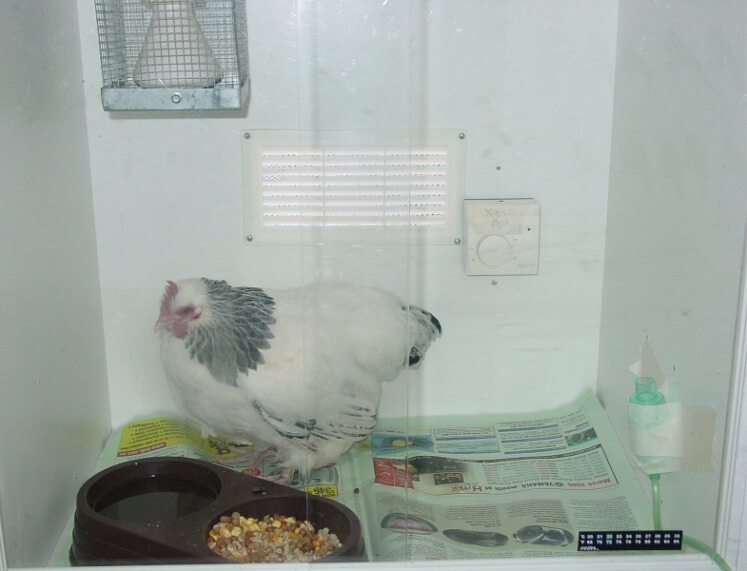

Pet chickens make wonderful pets. We know how bonded owners can be to their birds. Chickens have their own unique individual personalities. Many may be very endearing and make really bonded pets. “Beauty is in the eye of the beholder” many breeds are magnificent. For those living in Melbourne Collingwood Children's Farm has some stunning chicken breeds on display to the public. Pet bird owners generally name each bird and and easily recognize each chook from a distance.
From Dr Phil View consider the following when acquiring your new or replacement birds.
- Vaccinated at one day old for Mareks disease.
- Ideally choose a breed that does not lay an egg every day like the Isa Brown - as they are more prone to cancers and disease related to the continual egg laying. Choose a heritage or native breeds, Bantam or Silke or other pure pretty breeds like orphingtons.
- The birds start laying at about 22 weeks old -called "Point of lay".
- If you purchase an older bird ie 20 weeks they should ideally be have been vaccinated against respiratory disease viruses also.
- Ideally get at least 3 birds.
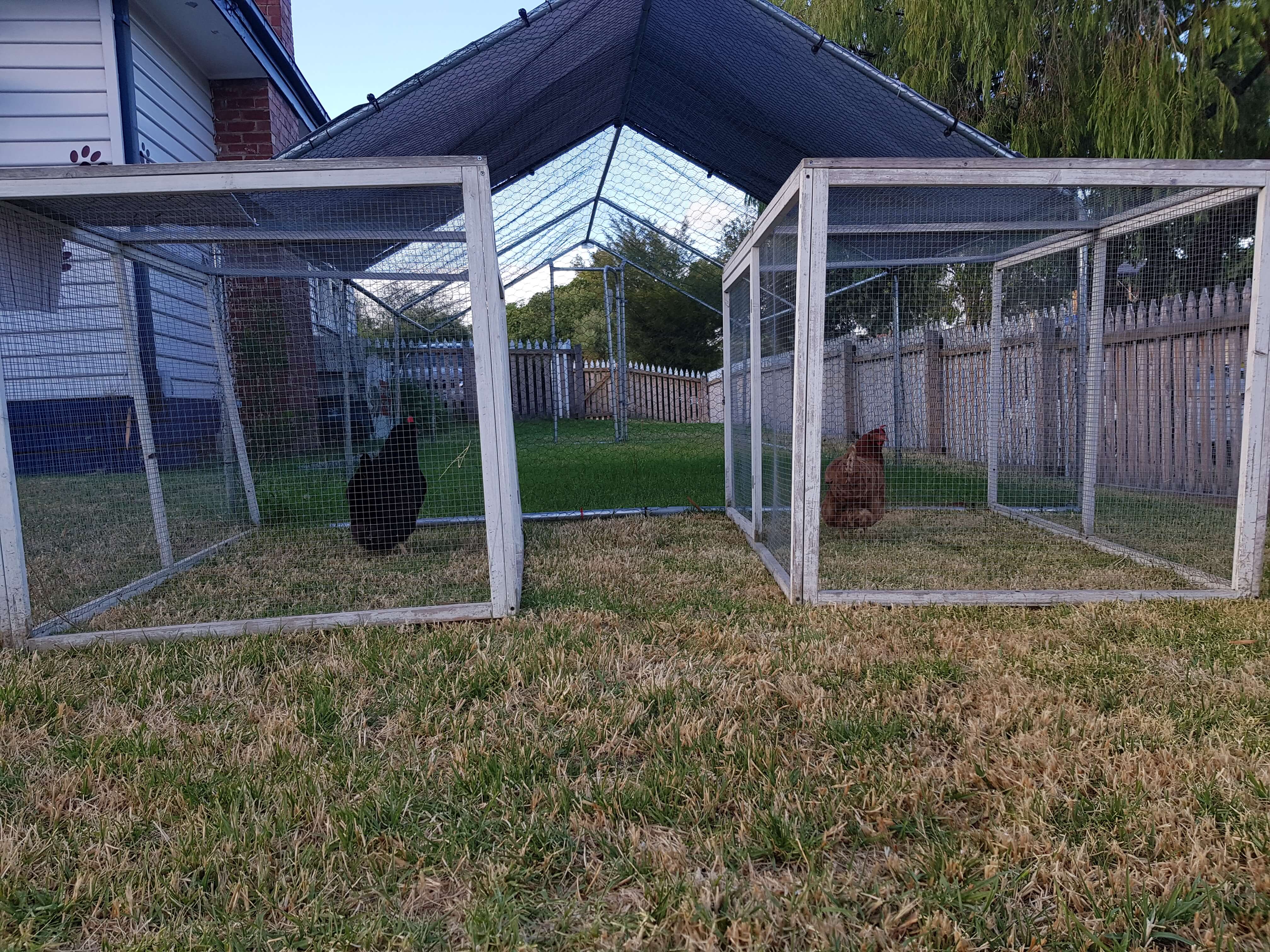
Out side daily time - at Melbourne chicken Vet - the Poultry vet facility for pet chickens.
Chickens are derived from the wild jungle fowl of South-east Asia and have been domesticated for over 2000 years. Popular varieties of pet chickens include Leghorns (white), Rhode Island Reds (red), Australorps (black), Barnevelders and Light Sussex. Bantams are small chickens, often miniatures of large poultry varieties. Silkie Bantams go broody readily and are often used to incubate eggs of other species. It often surprises us -"Chicken vets" - how bonded owners are with their pet chickens. Being a bird clinic, it is great for us to work with such big, friendly avian patients. We recommend that at least one of the flock should visit a "chicken vet" on an annual basis.
Home grown free range eggs are usually so much healthier and tastier than store bought ones and chook owners are playing their part in sustainable living and indirectly taking a stand against battery hen eggs. Healthy human food left overs are put to good use with chickens and there is less wastage great recycling! Chickens are relatively low maintenance and generally don't need to be walked, unless you happen to live in an apartment. Trust the Yanks, in the USA harnesses are available to fit chooks for their daily walks! Disposable nappies are also available for inside chickens but this has yet to catch on in Melbourne
Housing and husbandry
- Medical treatments for coccidia and worms are necessary - depending on the faecal egg count results. Over the counter products are available - we can even post them out to you. and are suitable for laying hens.
- We -"Chicken vet" have a bird wormer safe to use in egg-laying birds.
- Bird Vets Melbourne have fantastic products for mites and lice that are safe- work well- and will keep your "babies" more comfortable - and will not affect the insects and parasites in the environment.
- Provide an elevated sheltered roosting area and litter or other soft substrate to protect feet and keep the floor dry.
- Place food and water dishes so that chickens do not defecate in them OFF THE FLOOR.
- Feed scraps on a container -or on grass - careful not to contaminate the food with droppings.
- Avoid access to metallic objects such as coins, toys, nails, solder or loose wire or any other sources of lead or zinc.
- Protect from predators, especially foxes. The coop and the "outdoor" runs need to be fox proof.
- Should I keep a rooster? We don't recommend it for first-time chicken owners... at least not in urban areas! Roosters are not needed for hens to lay eggs and roosters often crow throughout the day. But they can have amazing beauty and stature and help protect hens against predators.
- Perches for Chickens - Dr Phil like large natural logs - about 10cm diameter or more - cut in half - The hens -sit or lie down on their tummies -when sleeping . AS the get older the perch diameter needs to be increased -for a more restful sleep! The unevenness if great for foot health -as the weight distributes - ideal. Perches should be about 40 cm off the ground.
"Chicken-Vet" - Diet
- Feed a variety of food groups.
- Feed a combination of chicken layer pellets and mixed grains (barley, wheat, rice).
- Also give daily dark leafy green and yellow vegetables (spinach, silver beet, grated carrots, beans, peas, broccoli, seeding grasses, etc.)
- Shellgrit is important for crushing and digestion of the grains and food in the muscular gizzard.
- Good layers need an additional protein source such as meat or legumes, or high protein commercial layer feed daily.
- Fruit may be offered, as can multi-grain bread, pasta or human table scraps.
- In prolific layers a protein source and calcium may need to be added.
- Avoid chocolate, Avacado, coffee or alcohol, as these may be toxic to pet chickens.
- Dr Phil's Favourites chook treats- Tomato, cheese, sunflower.
Common illnesses - seen at Chicken veterinarains
- Mareks Disease - Occurs generally in chickens younger than three years old -Is a Herpes Virus Disease. Try to purchase vaccinated birds but this does not guarantee that they will not get the disease. Often causes Lameness and falling over - and once diagnosis of Marek is confirmed is usually fatal at bird vets Melbourne.
- Chicken Tumours - especially internal abdominal tumours.
- Sinusitis and other respiratory infections. These need early treatment before pus builds up in the sinuses. If you purchase "point of lay" birds at 22 weeks - they should also be vaccinated against respiratory disease viruses.
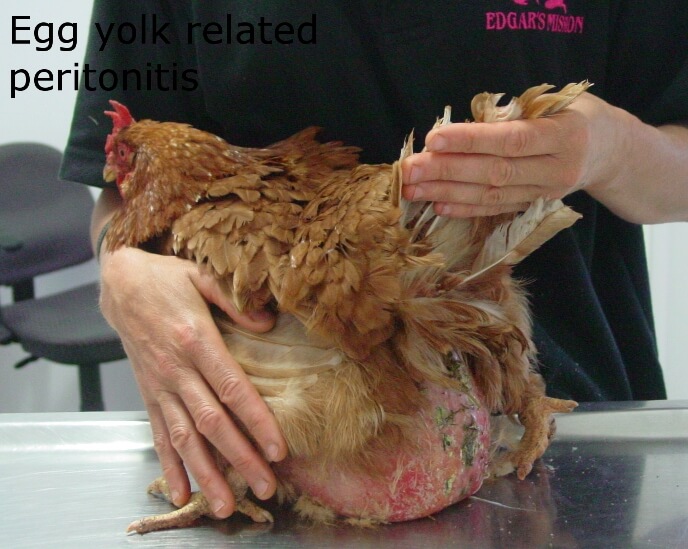
- Egg yolk related peritonitis and other female reproductive problems.
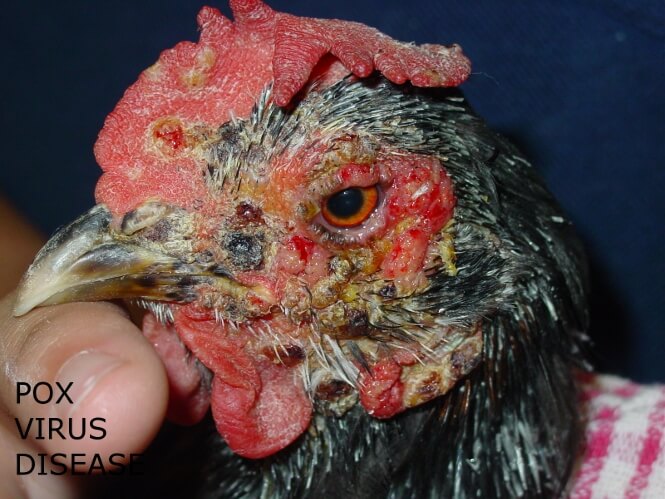
- Pox Virus Disease - mosquito transmitted -see the picture below. Protect the wattle from mosqueto bites.
- Predator attacks - especially foxes.
- Coccidiosis - an intestinal protozoal disease and worm parasites.
- Worms - Round worms (Ascarids and Heterakis) and Capillaria.
- Crop dilatation and impaction.
Chicken Vet - a picture of pox virus infection in a hen
We recommend a health check (with droppings tested ), both when you acquire your new pet chicken) and each year thereafter, to check for and prevent common illnesses listed above. And for flock health.
- Crop dilatation and impaction.
A nice Chicken resource at:http://www.mypetchicken.com/ebook.aspx
Birds often hide signs of illness and may only appear unwell when they are very sick. It is important to seek advice early if your bird looks unwell.
The Pet Chicken – a pet of the future. – Some cases and insights. Part 1. By Dr Phil Sacks
Climate change, limited resources, and the ever increasing entropy of the world, has resulted in the return of popularity of the pet chicken into the Australian Backyard.. They are a sustainable resource providing healthier eggs and an outlet for leftover food - great recyclers. And the pet chicken makes a wonderful pet especially if has being hand raised from a chick. It is one of the more underrated pets. As the human animal bond develops and strengthens the demand for veterinary care for chickens increases.
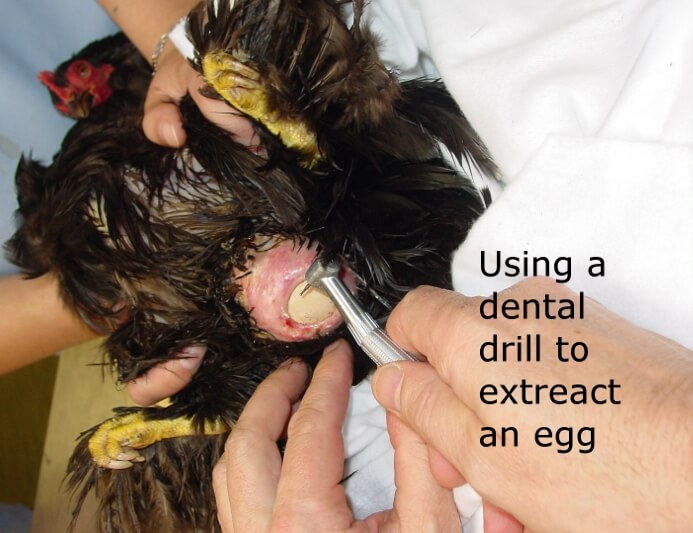
At our Melbourne Bird-Vet facility we see Chicken patients on a daily basis. We do surgery on pet chickens almost every week. Did you know we have done hysterectomies on pet-cooks!
Chicken Veterinary care involves treating the backyard flock as a unit, as well as treating the individuals that become sick. In smaller flocks it is often cost prohibitive to vaccinate the chicks. The vaccines are often sold in thousand dose units, that all need to be used at the same time. So there is an increase incidence of diseases like Mareks and Respiratory disease for which the birds ideally should be vaccinated.
I recently asked a client that brought in a sick pet chicken for veterinary treatments her view of Chickens as pets: Reading her short response is both informative and indicative of the trend.
Karen told me and I quote “the humble chicken has a BIG personality. I’ve had the privilege to own several hens that have roamed free range in my suburban backyard for the past five years and each of them have provided me with countless hours of entertainment, drama, amusement, annoyance and eggs. These delightful animals are great communicators and will chat at length if you engage them in conversation, no matter what language you speak. They also make a lot of eye contact and constantly watch you in the hope that you will provide food and/or attention. Just passing by the back door will result in several little chicken heads popping up from all corners of the yard to watch your every move. It’s like living in a Meerkat colony or working for a government department with open plan offices.”
Insights to some of the interesting cases seen at Burwood Bird clinic recently.
Case 1 Freebie – Inject my pet chook daily – Doc you must be joking?
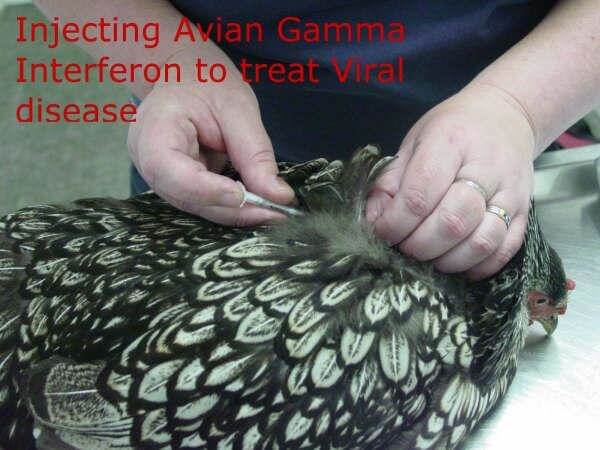
Freebie a Silver-Laced-Wyandot hen – weighing 3 kg was presented for lethargy, dropped appetite and had stopped laying eggs. On clinical examination she appeared quiet but otherwise normal. Freebie was lucky to have an owner that was prepared to have here fully evaluated. The diagnostic tests we carried out included whole body X- rays – blood samples to a veterinary laboratory for haematology and biochemistry testing, droppings testing for parasites, and Chlamydia testing.
The most significant abnormality was a very high white cell count and a high lymphocyte count with changes strongly suggestive of viral disease. As many readers know we have limited options available to treat viral disease. Our bodies produce a non specific antiviral product called Interferon that is a potent antiviral molecule. We were able to get chicken derived interferon, and used it as part of the treatment of the suspected viral condition. Other treatments included antibiotics, warmth, crop feeding and “TLC”.
Picture 1: Freebie is being injected under supervision at Burwood Bird Clinic by her owner. Freebee received 3 injections a week for 16 weeks. The injections are given with an insulin needle. The owner had no problem administering the anti viral injections.
Case 2: Phoebe - Lymphoid tumour of in the skin. - chicken vet melbourne
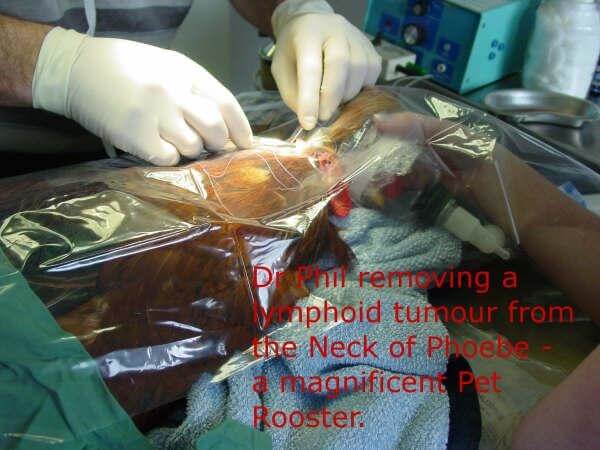
Phoebe is a spectacular 6 years old rooster. He rules the roost at home. He is doted upon by his loving owners. Phoebe was presented with a lump on his neck that was growing rapidly. The owners thought it may be thyroid lump. The lump was white, smooth, raised and about 1.5 cm diameter. – During the consultation, a needle was put into the lump, the cells from the needle gently put onto a slide - and the tiny sample examined under the microscope. The sample appeared to be cancer and likely malignant. The following day Phoebe had surgery to remove the “lump”. The removed lump was sent off for analysis to a specialist veterinary pathologist. . The Pathology result: Lymphoma or cancer of the lymph glands, and that the tumour was malignant with a very poor prognosis.
In spite of the laboratory diagnosis Phoebe had made a good recovery, and is back to normal. Phoebe comes in for a routine blood testing every 3 months and fortunately the last two tests results have been normal.
Picture 2: Phoebe under general anaesthetic, having his lymphoid tumour surgically removed. Dr Phil uses clear sterile plastic drapes, to cover the patient because they are light and transparent enabling the birds breathing to be seen and monitored throughout the procedure.
Case 3 Sore itchy feet.- chicken veterinarian
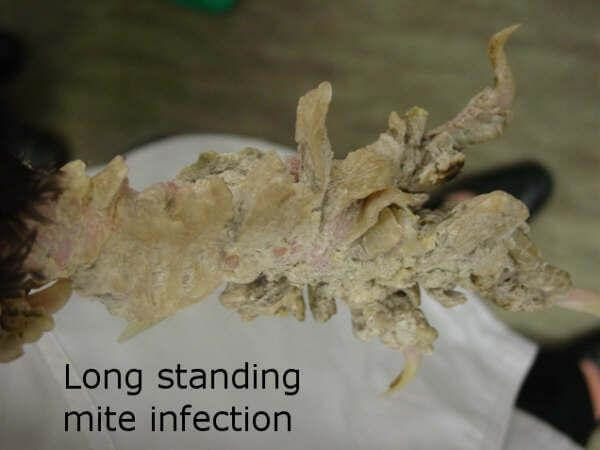
“Mr. H” is a 2.3 kg rooster that was presented to our Bird-clinic with growths on his feet. He seemed uncomfortable and irritated. The heavy scale on the feet was due to the body’s response to chronic or long standing irritation – over many months. We removed a piece of scaly material and crushed it and examined it using a microscope. Sure enough the little critters responsible were found. They were mites and had made their home in Mr. H’s feet. The treatment involved gradually removing the scale. First the area was gently lubricated using a mineral oil. This both softened the crusts and helped suffocate the mites. An Acracidal (Anti mite) mediation was then used. “Mr. H” feet are gradually returning to normal now that the mites have been removed. We expect him back to normal in about 10 weeks. Recovery takes so long because the lesions had being present and building up over many months.
Picture 3: .Mr. H’s foot 1 week after treatment for a long standing mite infection. Note the excessive scaling and overgrown abnormal nails
Having free range chickens at home has many benefits. It is taking a stance against the cruelty associated with commercial egg production. It results in returning to the ways of our grandparents, and living a healthier self sufficient life style. This fact often makes the Pet Chicken owners feel a whole lot better and the eggs taste so much “sweeter’.